
CS2 case opening guide
CS2 and CS:GO Case Opening Guide
A plain-English walkthrough of how cs2 case opening actually works: what a case is, how keys unlock it, the rarity tiers inside, the real drop odds, and how float and StatTrak change what you pull. Read this before you open anything.
What is a CS2 case
A CS2 case is a sealed virtual container tied to a specific set of weapon finishes. When you open one, the game returns exactly one item drawn from that case's pool, weighted by rarity. Cases are the main way cosmetic cs2 cases content enters the economy, and because the same containers carried over from Global Offensive, everything here applies equally to csgo cases. Each case shows its full contents before you open, so you can always see which mil-spec, restricted, classified and covert finishes are possible, plus the rare special-item slot for knives and gloves.
Cases arrive in the game as random end-of-match drops and cannot be bought directly from Valve, though they trade freely on the Steam and third-party markets. Retired cases that have left the active drop pool tend to cost more over time because no new copies are created - a supply detail worth checking on our case prices page before you commit.
Cases and keys
A case on its own does nothing. To open it you also need a matching key, and each open consumes one key and one case to reveal one item. Keys are sold at a fixed price and are specific to the container type, so you cannot open a Kilowatt Case with a key meant for an older collection. That two-part cost - case plus key - is the true price of a single open, and it is the number to keep in mind when you compare the value of what might come out.
Because every open costs the same regardless of what drops, the maths is simple: you are paying a fixed entry for a weighted random result. Understanding that weighting is the whole point of the next two sections.
Rarity tiers explained
Every standard case runs through the same colour-coded rarity ladder. Weapon skins fill the four lower tiers, and the top gold tier is reserved for the rare special items - knives and, in glove-enabled cases, gloves. Higher tiers are rarer and, as a rule, worth more.
Mil-Spec - Blue
The common weapon-skin tier. Most opens land here, so blue-tier finishes are the cheapest and easiest to complete a set with.
Restricted - Purple
A clear step up in scarcity and price. Purple finishes are the first tier most collectors actively chase.
Classified - Pink
Uncommon, higher-value skins. This is where many recognisable rifle and pistol finishes sit.
Covert - Red
The rarest weapon-skin tier, home to the headline covert rifles and AWPs that anchor a case's reputation.
Special - Gold
The rare special-item slot: knives in most cases, or gloves in glove-enabled cases. The scarcest and usually most valuable pull.
Drop odds - the real numbers
These are the community-observed probabilities that have held steady across standard cases. They are the same whether a case is cheap or expensive, so a pricier container does not improve your percentage chance - it only raises the value of the items in each tier.
| Rarity tier | Colour | Approx. chance |
|---|---|---|
| Mil-Spec | Blue | 79.92% |
| Restricted | Purple | 15.98% |
| Classified | Pink | 3.2% |
| Covert | Red | 0.64% |
| Special item | Gold | 0.26% |
Put plainly: roughly four out of five opens return a blue mil-spec skin, and the rare gold special item lands about once in every 400 opens. Each open is independent - a long dry streak does not make the next gold any more likely.
Float and wear tiers
When an item is generated, the game rolls a hidden float value between 0 and 1. That number maps to the visible wear of the skin, which is why two people can unbox the same finish and end up with items that look - and sell - very differently. Lower floats look cleaner and usually carry a premium.
| Wear tier | Float range | Look |
|---|---|---|
| Factory New | 0.00 - 0.07 | Cleanest, highest value |
| Minimal Wear | 0.07 - 0.15 | Very light wear |
| Field-Tested | 0.15 - 0.38 | Visible but moderate wear |
| Well-Worn | 0.38 - 0.45 | Noticeable scratching |
| Battle-Scarred | 0.45 - 1.00 | Heaviest wear, lowest value |
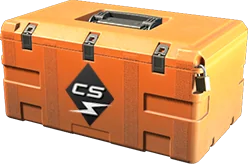
One open, one weighted roll
Open the Kilowatt Case and the game draws a single item from its pool. About 80% of the time that is a blue mil-spec skin; a covert red lands under 1% of opens, and the Kukri Knife special-item slot roughly 1 in 400. Whatever drops then gets its own float roll, setting the final wear.
StatTrak and special items
Some unboxed weapons come as StatTrak, a built-in counter that records confirmed kills with that weapon. StatTrak is a separate roll layered on top of the item, so only a share of opens produce the tracked version - which usually makes it scarcer and more valuable than the plain finish. Knives can be StatTrak too; gloves cannot, and gloves also carry no name tag, so wear and pattern are all that matter for them.
The gold special-item slot is where the biggest values live. It holds knives across most cases and glove finishes in glove-enabled cases like the Glove, Clutch and Fever cases. If you want to understand what makes those items expensive, our knife skins and glove skins guides break down model, finish, float and pattern.
Practical tips before you open
- Know the true cost per open - always add the key price to the case price before you decide.
- Read the case contents first - check which covert and gold items are possible so you know what you are actually playing for.
- Do not trust "hot" or "cold" streaks - every open is independent and the odds never shift.
- Compare with the market - the finish you want is often cheaper to buy outright than to chase through opens.
- Mind the float - an unbox can land any wear tier, so the item you get may be worth far less than a Factory New listing.
- Set the budget before you start, not after a run of bad opens.
Opening responsibly
Case opening mixes real money with randomness, so treat it as paid entertainment rather than a way to profit. Decide on a fixed budget you are comfortable losing, and stop when you reach it. Remember that the long-run maths favours the house: across many opens the average value returned is designed to sit below what you pay in. Never chase a loss by opening "one more" to make it back. If any of this stops feeling like fun, step away and read our responsible play notes, which are linked from every page.
Ready to try a case opening?
Confirm you are 18+ and continue to the external case opening platform, or keep researching prices first - the choice is yours.
FAQ
Case opening - frequently asked questions
Do I need a key to open a CS2 case?
Yes. A standard weapon case is opened with a matching case key, and each open consumes one key and one case to return exactly one item from that case's pool.
What are the real CS2 case drop odds?
Community-observed odds are roughly 79.92% mil-spec blue, 15.98% restricted purple, 3.2% classified pink, 0.64% covert red and about 0.26% for the rare gold special item such as a knife or gloves.
What is float in case opening?
Float is a hidden value between 0 and 1 rolled when the item is generated. It maps to the visible wear tier, from Factory New at the low end to Battle-Scarred at the high end, so two identical skins can look and sell differently.
Are the odds better on more expensive cases?
No. The rarity distribution is the same across standard cases. A pricier case only changes the value of the items inside, not your percentage chance of hitting a covert or a gold special item.
What is StatTrak and how do I get it?
StatTrak is a counter that tracks confirmed kills with the weapon. It is a separate roll on top of the item: only some unboxed items come StatTrak, which typically makes them scarcer and more valuable than the normal version.
Can I improve my chances by opening more cases?
No. Each open is independent, so past results do not change the next roll. Over many opens the long-run return still favours the house, which is why a fixed budget matters more than any opening strategy.
Keep reading