
Kilowatt set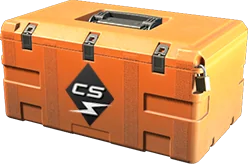
CS2 · CS:GO · Skin collections
A collection is the backbone of every CS2 skin. Understanding how collections map to cases, which finishes belong to each set, and how a collection's rarity ladder works makes it far easier to research an item before you trade or open a case. This guide covers case collections, map collections, retired sets and the way collections shape scarcity and price.
The basics
A skin collection is a named group of weapon finishes that Valve releases together as a set. Every finish in the game belongs to exactly one collection, and each collection spans several rarity tiers - from common mil-spec blue at the bottom up to covert red at the top, plus a rare gold slot reserved for knives or gloves in case-linked sets. The collection is the list of possibilities; it defines what can appear, not how often.
Because collections are the organising layer of the whole economy, they are also how a good skin collections catalogue is structured. When you look up a finish like the AK-47 Bloodsport, the first useful fact is that it belongs to the Spectrum collection - that single detail tells you which case can return it, what other skins share its pool, and roughly where it sits on the rarity ladder. Collections turn thousands of scattered weapon finishes into something you can navigate.
Two families
Not every collection reaches you the same way. The two main families are case collections and map (souvenir) collections, and they behave very differently on the market.
The most common type. Each is tied to a sealed container - the Kilowatt Case, Recoil Case, Fever Case and so on - and opening that case with a key returns one weighted item from the set, including the rare knife or glove slot.
Older sets tied to competitive maps such as Dust II, Mirage or Cache. Their finishes drop as souvenir or rank-up rewards rather than from cases, so they have no knife slot and a different supply pattern.
Case collections have a steady, key-gated supply while active; map and souvenir collections depend on events and drops. That difference is a big reason two skins of the same rarity can sit at wildly different prices.
Directory
A quick directory of selected CS2 collections, the case each is drawn from, a signature finish and the tier that finish sits at. Use it as a map of where popular skins live.
| Collection | Source case | Signature finish | Tier |
|---|---|---|---|
| Kilowatt | Kilowatt Case | AWP | Desert Hydra | Covert |
| Recoil | Recoil Case | M4A1-S | Printstream | Covert |
| Gallery | Gallery Case | AWP | CMYK | Classified |
| Fever | Fever Case | Driver Gloves | Imperial Plaid | Gold |
| Clutch | Clutch Case | M4A4 | Neo-Noir | Covert |
| Spectrum | Spectrum Case | AK-47 | Bloodsport | Classified |
| Chroma 3 | Chroma 3 Case | PP-Bizon | Harvester | Classified |
| Dreams & Nightmares | Dreams & Nightmares Case | AK-47 | Nightwish | Covert |
| Fracture | Fracture Case | Desert Eagle | Printstream | Covert |
| Horizon | Horizon Case | AK-47 | Neon Rider | Covert |
| Prisma | Prisma Case | AWP | Atheris | Classified |
Signatures and tiers are shown as representative examples for research and may be simplified.
Case-linked sets
Three case-linked collections that show how a signature finish anchors a whole set. Open a case to see the full pool, or view the items in the case directory.
Rarity
Rarity is not a property of a skin in isolation - it is a position inside a collection. Every case collection distributes its finishes across the tiers, and the number of items at each tier shapes how often you actually see them. Most collections pack many mil-spec and restricted finishes at the bottom, a handful of classified skins in the middle, and just one or two covert items at the top, followed by the rare special-item slot.
Community-observed odds per open run roughly 79.9% mil-spec blue, 16% restricted purple, 3.2% classified pink, 0.64% covert red and about 0.26% for the gold knife or glove slot. Because those weights are fixed per case, a collection with only one covert makes that single finish the concentrated target of all the red-tier demand - which is why flagship coverts like the Kilowatt AWP Desert Hydra command such a premium relative to their case price.
Scarcity
The active drop pool is not permanent. Valve periodically rotates older cases out of it, and once a case leaves, its case collections stop producing new copies entirely. Existing items keep trading, but the supply is now capped - every skin that gets consumed in a trade-up or lost to an account is never replaced. Over months and years that steady, one-directional drift is what pushes many retired sets upward in price.
This is the single most important idea for anyone comparing csgo collections against fresh releases. A new case is cheap because millions of copies flood the market each week; a discontinued collection is scarce because nothing new is coming. When you see two finishes of the same rarity priced very differently, the collection's pool status is usually the reason. Our case price guide shows how active and retired containers separate on cost.
Practical reading
Every collection has a ladder you can read top to bottom. Knowing where a finish sits tells you its base scarcity before wear, pattern or StatTrak enter the picture.
Gold special items (knives and gloves) and covert reds. One or two finishes carry most of the collection's value and demand.
Classified pinks and restricted purples. A wider band of desirable, mid-priced skins that many players actually run in-game.
Mil-spec blues. The most common tier, cheap individually but the raw material for trade-ups toward higher tiers in the same set.
Confirm you are 18+ and continue to the external case opening platform, or keep browsing the stash and skin catalogue first - the choice is yours.
FAQ
A CS2 skin collection is a named set of weapon finishes grouped together by Valve. Each collection contains items across several rarity tiers, and most modern collections are tied to a specific case that returns one item from that set when opened.
A collection is the list of finishes; a case is the sealed container that drops one of them. Case collections are unboxed with a key, while some older collections come from maps or operations through drops rather than case openings.
Yes. A skin's rarity tier within its collection sets its base scarcity, and whether the collection is still in the active drop pool affects supply. Retired collections tend to appreciate because no new copies enter circulation.
A retired or discontinued collection is one whose case has been removed from the active drop pool. Existing items still trade, but no new ones are unboxed, so scarcity slowly increases and prices often drift upward over time.
You can get any item in the collection, but not with equal odds. Higher tiers are far rarer than lower ones, and the rare gold slot for knives or gloves sits at roughly a one-in-four-hundred chance per open.
Yes. When Counter-Strike 2 replaced CS:GO the collections carried over unchanged. The same sets, finishes and rarity ladders apply, only the rendering engine is different.
Keep exploring
This link opens an external CS2 case-opening platform. Tick both boxes to confirm you are of age and accept the terms, then continue.